

Celery Allergy
Celery is a common ingredient in cooking. It is used in soups, sauces, salads, meat dishes and various seasoning mixes. While it is an ordinary food for most people, it can pose a genuine health risk to those with a celery allergy.
In the European Union, celery and products derived from it are included among the 14 categories of substances or products that may cause allergies or intolerances, listed in Annex II of Regulation (EU) No 1169/2011.
What is celery allergy?
Celery allergy occurs when the immune system mistakenly identifies certain proteins in celery as harmful and reacts against them.
Reactions can range from mild symptoms to severe allergic responses. In some cases, celery allergy can cause anaphylaxis, a potentially life-threatening reaction requiring immediate medical attention.
Celery allergy may also be associated with sensitivity to certain pollens, particularly birch or mugwort pollen. This relationship is known as cross-reactivity. However, having a pollen allergy does not automatically mean that someone is allergic to celery.
Which forms of celery can cause reactions?
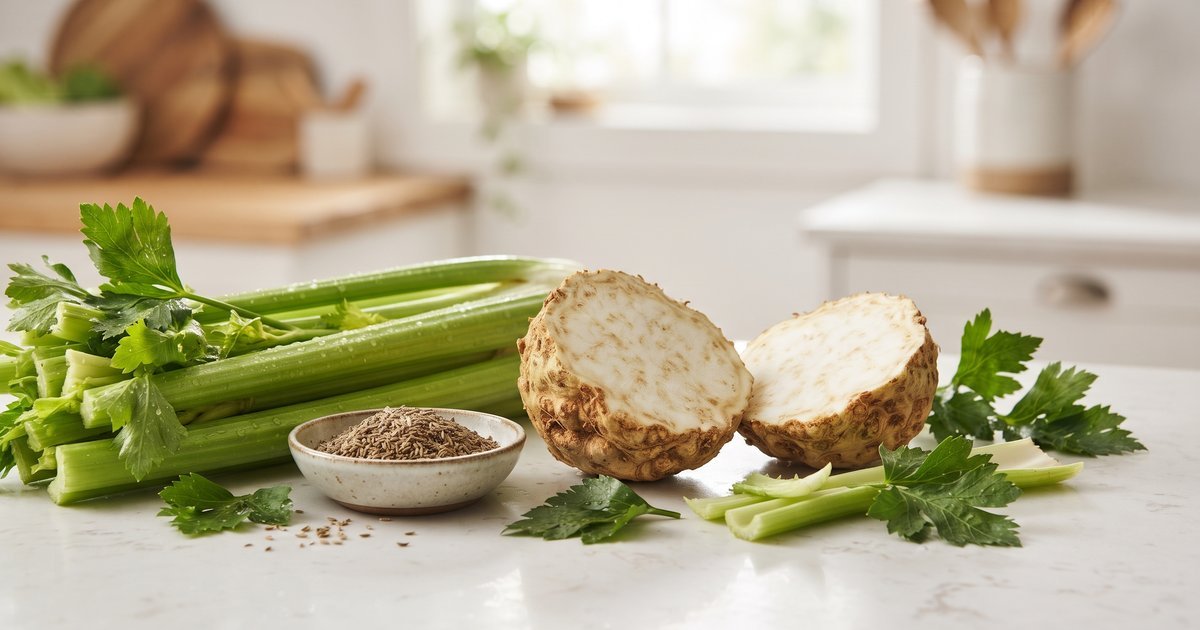
Celery allergy is not limited to fresh celery stalks. Different parts of the plant and products made from it may be involved:
-
Celery stalks – commonly used in salads and cooked dishes.
-
Celeriac – the root of the celery plant.
-
Celery leaves – used fresh or dried for flavouring.
-
Celery seeds – used in certain seasoning blends.
-
Celery salt and other seasonings containing celery.
People diagnosed with celery allergy should ask their allergist which forms and products they need to avoid. They should not test these foods on their own.
Where can celery be found in food?
Celery may be difficult to identify when it is used as an ingredient in a more complex dish.
It may be found in:
-
soups and soup bases;
-
stock cubes, bouillon and concentrated stocks;
-
sauces and sauce mixes;
-
stews and cooked dishes;
-
salads and vegetable dishes;
-
seasoning blends and flavoured salts;
-
some meat products and processed foods;
-
certain drinks or food products containing celery juice or extract.
This list is indicative. Whether celery is present depends on the recipe and ingredients of each product.
What are the symptoms of celery allergy?
Symptoms may develop after eating celery and can affect different parts of the body.
Possible symptoms include:
-
itching or tingling in the mouth;
-
swelling of the lips, tongue or face;
-
hives and itchy skin;
-
nausea, vomiting or abdominal pain;
-
diarrhoea;
-
coughing, wheezing or difficulty breathing;
-
dizziness or weakness.
Some people experience symptoms mainly in the mouth and throat as part of pollen-food syndrome. In other cases, reactions can be widespread and severe.
Anaphylaxis is a medical emergency. Sudden swelling of the tongue or throat, breathing difficulties, choking sensations, severe dizziness or loss of consciousness may indicate a serious allergic reaction. Call the local emergency number immediately. If the person has been prescribed an adrenaline auto-injector, it should be used according to their medical action plan.
How is celery allergy diagnosed?
The diagnosis should be made by an allergy specialist, based on the patient's medical history and clinical assessment.
Depending on the situation, the doctor may recommend:
-
skin-prick allergy tests;
-
blood tests for specific IgE antibodies;
-
other investigations, if needed to clarify the diagnosis.
A positive allergy test alone does not prove that a person has a clinically significant food allergy. Results must be interpreted alongside symptoms and medical history.
Avoiding entire food groups or testing a suspected allergy by eating the food without medical advice is not recommended.
What should people with celery allergy know?
After the diagnosis has been confirmed, the person should follow their doctor's recommendations and avoid foods containing the ingredient responsible for the reaction.
Practical precautions include:
-
Read ingredient lists carefully every time you buy a product.
-
Check seasonings, stocks and processed foods as well.
-
Ask restaurant staff about the ingredients used in dishes.
-
Inform staff about the allergy and the risk of cross-contact.
-
Avoid shared utensils, surfaces or equipment that may transfer traces of the allergen.
-
Follow the emergency action plan provided by your doctor and carry prescribed medication when appropriate.
What are the requirements for restaurants and food manufacturers?
Regulation (EU) No 1169/2011 includes celery and products thereof in Annex II, the list of 14 allergen categories that must be declared under the applicable food information rules.
For prepacked foods, allergens listed in Annex II must be indicated in the ingredients list and clearly distinguished from the other ingredients through a typographical means, so consumers can identify them easily.
For non-prepacked foods, including meals served in restaurants, information about the presence of allergens must be provided in accordance with Article 44 of the Regulation and applicable national rules.
Accurate information is essential. Even a small amount of an ingredient may be enough to trigger an allergic reaction in a sensitive person.
Conclusion
Celery may seem like an ordinary ingredient, but it can pose a risk to people with a celery allergy. Its presence is not always obvious, as it can be used as a root, leaves, seeds, flavoured salt or an ingredient in various food products.
Reading labels, communicating with restaurant staff and following medical advice are important steps in preventing allergic reactions.
At La Vali, we believe that providing accurate allergen information is an important part of a responsible dining experience.
Disclaimer: This article is intended for general information and educational purposes. It does not replace medical consultation, diagnosis or advice from an allergy specialist.
References:
-
Regulation (EU) No 1169/2011 – Annex II and Articles 21 and 44: https://eur-lex.europa.eu/eli/reg/2011/1169/oj
-
Anaphylaxis UK – Celery Allergy: https://anaphylaxis.org.uk/factsheets/celery-allergy/
-
NHS – Food Allergy: https://www.nhs.uk/conditions/food-allergy/
-
NHS inform – Food Allergy: https://www.nhsinform.scot/illnesses-and-conditions/nutritional/food-allergy/

💬 Comments (0)
💬 Join the Conversation
Log in quickly with Telegram to leave a comment.