
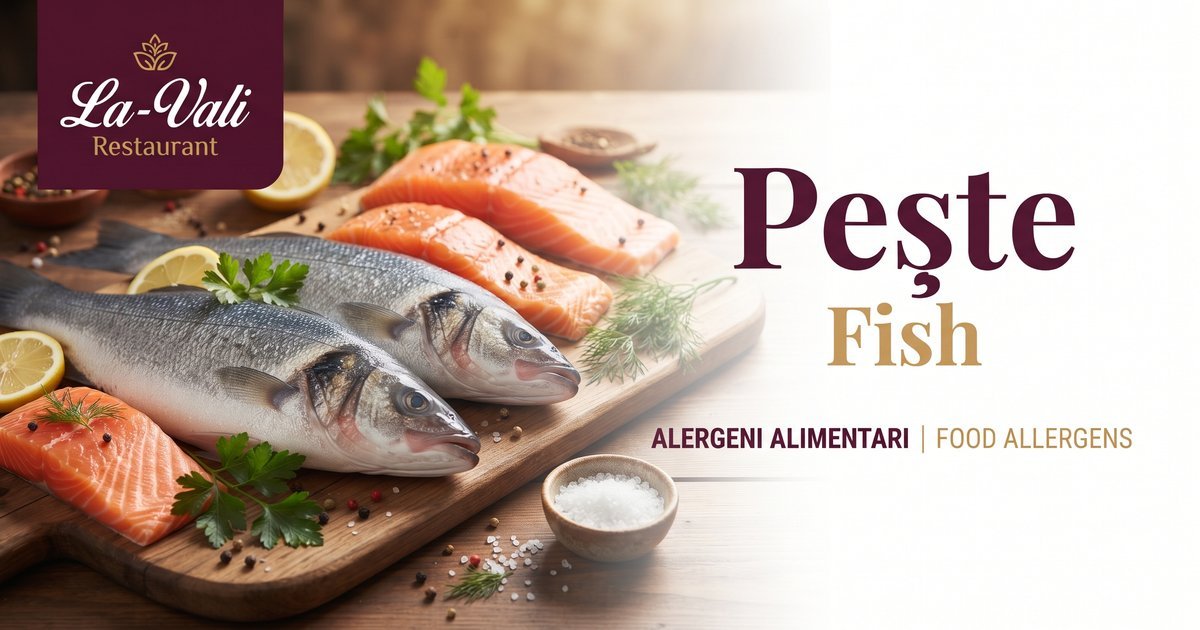
Fish
Fish and products derived from fish are among the food allergens that must be declared under European food labelling legislation. Fish is used in a wide variety of dishes, from traditional recipes to processed foods and sauces.
For people with a fish allergy, consuming fish or products containing fish proteins may trigger allergic reactions, sometimes even after exposure to very small amounts.
Where can fish be found?
Fish is used in many dishes and food products. Common examples include:
-
Fresh, frozen, smoked or marinated fish;
-
Fish soups and broths;
-
Grilled, baked or fried fish dishes;
-
Salads and pasta dishes containing fish;
-
Canned tuna, sardines and other fish species;
-
Fish-based sauces and pastes;
-
Processed foods and ready-made meals;
-
Some Asian dishes containing fish sauce or fish extracts.
Fish may also be present in products where its presence is not immediately obvious, making ingredient and label checks essential.
What does a fish allergy involve?
A fish allergy occurs when the immune system reacts to certain proteins found in fish tissue. One of the most important proteins involved is parvalbumin, which is found in many fish species.
Some people may react to several fish species, while others may tolerate certain species and be allergic to others. Such tolerance should never be assumed without assessment by an allergy specialist.
Allergic reactions can range from mild symptoms to severe reactions, including anaphylaxis.
Possible symptoms include:
-
Itching and hives;
-
Swelling of the lips, face or tongue;
-
Abdominal pain, nausea and vomiting;
-
Coughing and breathing difficulties;
-
Severe systemic allergic reactions.
Breathing difficulties, swelling of the tongue or throat, and other signs of anaphylaxis require immediate emergency medical attention.
Fish and heat treatment
Fish allergens can remain active even after boiling, frying or baking. Therefore, cooking does not guarantee that the allergic risk is eliminated.
Furthermore, cooking vapours released during fish preparation may be a source of exposure for some highly sensitive individuals.
Fish is not the same as other seafood allergens
It is important to distinguish fish from other categories of aquatic food allergens.
-
Fish includes species such as salmon, trout, carp, cod and tuna.
-
Crustaceans include shrimp, crabs, lobsters and crayfish.
-
Molluscs include mussels, oysters, clams, squid and octopus.
A fish allergy does not automatically mean an allergy to crustaceans or molluscs. However, multiple allergies may occur and should be individually assessed by a medical specialist.
How can cross-contamination be prevented?
In a kitchen, cross-contamination can occur when fish or products containing fish proteins come into contact with other foods.
Important precautions include:
-
Using clean utensils and containers;
-
Keeping preparation surfaces separate;
-
Thoroughly washing hands and equipment;
-
Avoiding the reuse of frying oil in which fish has been cooked;
-
Carefully cleaning grills, trays and cookware;
-
Checking the ingredients and labels of all products used.
Removing fish from an already contaminated dish does not make it safe for someone with a fish allergy.
Our commitment to food information
At La-Vali, we believe that providing accurate information about ingredients and allergens is essential for our customers' safety.
We encourage anyone with a food allergy to request information before ordering and to inform our staff about any dietary restrictions.
This information is provided for educational purposes and does not replace professional medical advice from an allergy specialist.
💬 Comments (0)
💬 Join the Conversation
Log in quickly with Telegram to leave a comment.