
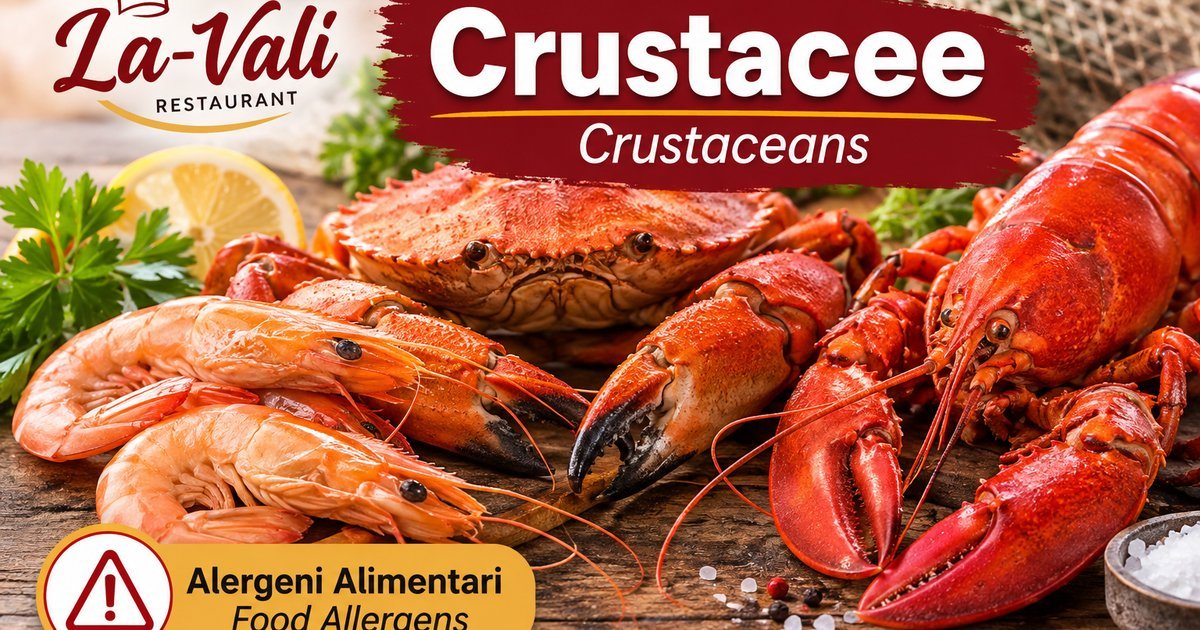
Crustaceans
Crustaceans are among the food allergens that must be declared under European food labelling legislation. For people with a crustacean allergy, consuming even a small amount of crustaceans or products containing them may trigger an allergic reaction.
What are crustaceans?
Crustaceans are aquatic invertebrates found in both marine and freshwater environments. Common examples include:
-
Shrimp and prawns;
-
Crabs;
-
Lobsters;
-
Crayfish.
These ingredients are widely used in seafood dishes, soups, sauces, salads and processed food products.
Where can crustaceans be found?
Besides obvious seafood dishes, crustaceans may also be present in foods where their presence is not immediately apparent:
-
Seafood soups and broths;
-
Seafood sauces and pasta dishes;
-
Salads containing shrimp or crab;
-
Asian dishes containing shrimp paste or extract;
-
Processed fish and seafood products;
-
Certain seasonings, concentrates and prepared foods.
Ingredients and product labels should always be checked carefully.
What does a crustacean allergy involve?
A crustacean allergy occurs when the immune system reacts to certain proteins found in these animals. One of the best-known proteins involved is tropomyosin.
Allergic reactions can range from mild symptoms to severe reactions, including anaphylaxis.
Possible symptoms include:
-
Itching and hives;
-
Swelling of the lips, face or tongue;
-
Abdominal pain, nausea and vomiting;
-
Breathing difficulties;
-
Severe systemic allergic reactions.
Breathing difficulties, swelling of the tongue or throat, or other signs of anaphylaxis require immediate emergency medical attention.
Crustaceans are not the same as molluscs
Although both groups are included in the European list of regulated food allergens, crustaceans and molluscs are biologically different groups.
Shrimp, crabs and lobsters are crustaceans, while mussels, oysters, clams, squid and octopus are molluscs.
Being allergic to crustaceans does not automatically mean being allergic to molluscs. However, multiple sensitivities may occur, and assessment should be carried out by an allergy specialist.
How can cross-contamination be prevented?
In a kitchen, cross-contamination can occur when food containing crustaceans comes into contact with a dish that should not contain them.
Important precautions include:
-
Using clean utensils and containers;
-
Keeping preparation surfaces separate;
-
Thoroughly washing hands and equipment;
-
Avoiding the reuse of frying oil in which crustaceans have been cooked;
-
Carefully checking ingredients and products used.
Cooking does not guarantee the removal of allergenic proteins.
Our commitment to food information
At La-Vali, we believe that providing accurate information about ingredients and allergens is essential for our customers' safety.
We encourage anyone with a food allergy to request information before ordering and to inform our staff about any dietary restrictions.
This information is provided for educational purposes and does not replace professional medical advice from an allergy specialist.
💬 Comments (0)
💬 Join the Conversation
Log in quickly with Telegram to leave a comment.